Skip to content

Firsthand.today

Building

  1. How Claude Code's Code Mode works

    X · Arindam_1729

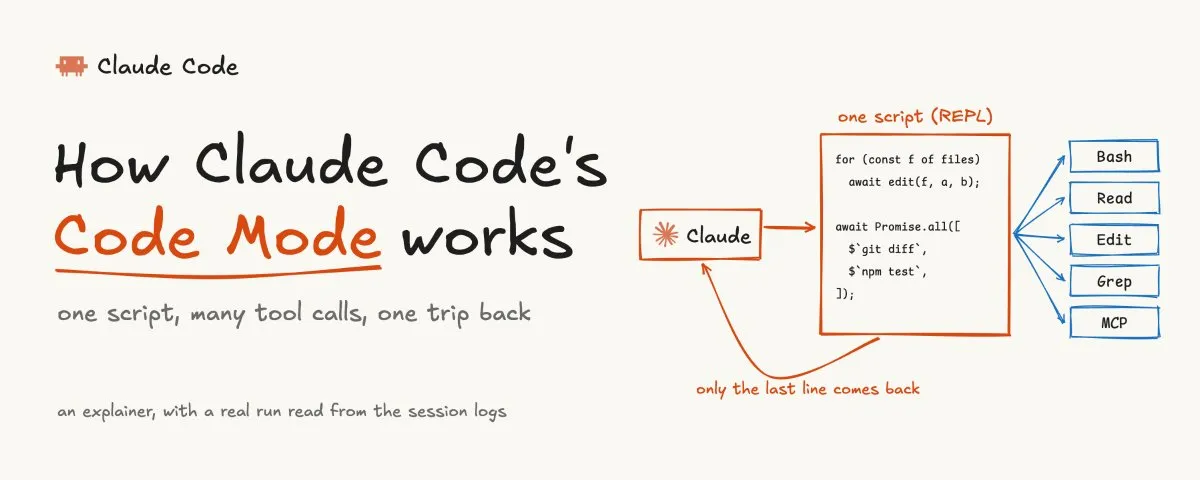
    Claude writes one JavaScript script that makes the tool calls itself, so a search, edit and test run in a single trip. In a side-by-side run, requests fell from 5 to 4 and each request read about 35k tokens instead of 53k, with cost roughly unchanged.

  2. I think we were giving our agent way too many tools to choose from

    r/LLMDevs · for-entire-phonly · 18 comments

    Tool schemas are re-sent every turn: a few heavy MCP servers add 15-20K tokens per request, so a 20-turn run carries 300K of input for the tool list alone. Keep the discovered block at the tail so the prefix stays cached.

    — MichelleZhao91
  3. How do you make AI agents reliable when they use multiple tools?

    r/AI_Agents · Aware-Resource9831 · 37 comments

    Save real tool-call inputs and outputs as a replay set and rerun the agent against them after any prompt or tool change, so regressions surface before production; pin the model version too, since silent updates change tool calls.

    — nmohoni
  4. Why Johnny Can't Patch

    dfarq.homeip.net · Dave Farquhar

    AI is finding vulnerabilities faster and more serious than humans did, pushing 2026 past double last year's CVE count. Having applied roughly 900,000 patches with a 21-day mean time to remediate, I argue the real blocker is money and incentives, not tooling.

  5. Microsoft open-sources TokenEconomizer to cut Claude Code and Codex token costs

    X · RrrroriaShen

    Microsoft's TokenEconomizer adds micro-skills, tool pruning and a loop guard around existing coding agents without retraining models. Across 277 SWE-Bench tasks, five agent-model combinations cut average cost 18.4–30.9%, with Claude Code plus Opus 4.8 down 30.9% but first-pass rate about one point lower.

  6. How is your org handling AI peer-review?

    r/ExperiencedDevs · SagansCandle · 177 comments

    Reviewing AI PRs where comments get pasted back into AI kills the discussion: authors don't defend decisions, don't learn, and the reviewer becomes the bottleneck blamed for lateness.

    — NasKe
  7. Claude Code Best Practices: 8 Habits From Real Solo Builds

    shahriaemon.com · Shahria Emon

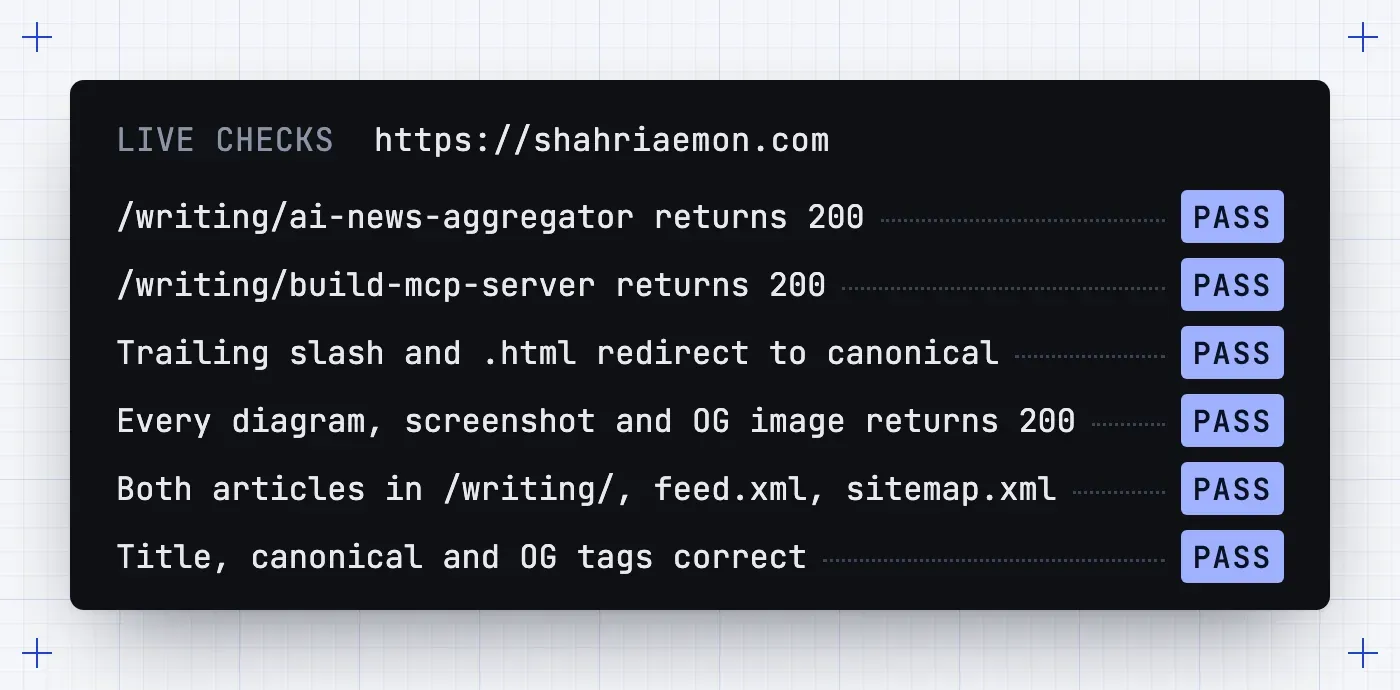
    After shipping a Telegram news bot, a finance app and a site rebuild solo with Claude Code, a developer lists eight habits that mattered: prototype first, write the spec, define done as verified live, test the rule across every day, mock external services, keep tests off production, build fallbacks, and demand measured numbers only.

  8. Software factories and code reviews with Harjot Gill

    newsletter.pragmaticengineer.com · Gergely Orosz

    CodeRabbit founder Harjot Gill describes running an agent-heavy software factory: 40 engineers shipping over 5,000 PRs a month at roughly $250K monthly AI spend, with verification layers from TLA+ to staged rollouts, and release-level review replacing per-PR review.

  9. How Airbnb uses cost per task to operate coding agents on Amazon Bedrock

    aws.amazon.com

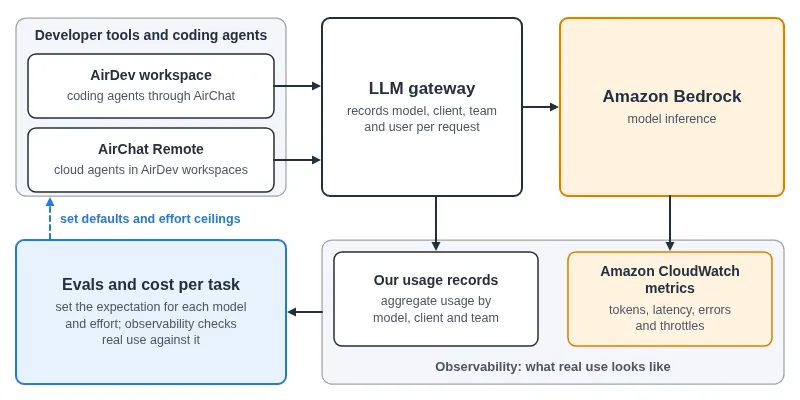
    Airbnb runs coding agents for thousands of engineers through an LLM gateway on Amazon Bedrock. It prices whole tasks from four token types, pairs eval scores with cost per task to set model defaults and effort ceilings, and uses CloudWatch metrics to catch production drift.

  10. Support copilot keeps repeating dead SQL tool calls

    r/AI_Agents · Lanky-Passenger-5777 · 15 comments

    A missing-column error is deterministic, so retrying with tweaked SQL can't fix it; cap identical failures at two, then return the real column list for that tenant and end the turn.

    — Aware_Risk7076, r0b3rtb, Wezabis2
  11. First experiences with spec-driven development

    warrenmar.com

    Running GitHub's Spec-kit with Claude Code Auto mode, the agent worked about 4 hours unattended before hitting quota, and a weekend two-person hackathon became roughly an hour of spec writing plus an overnight run and 1-2 hours of fixes. Tests are essential to steer the agent; compaction corrupts new specs.

  12. Half of What AI Delivers Needs Rework: After Logging 204 Dispatches, Managing AI Is Managing a Team

    liuqiwei.dev · 刘启威

    Over three weeks and 204 dispatches to five coding agents, first-pass acceptance stayed near 50% (Codex 38%, Antigravity 51%, DeepSeek Harness 50%), yet final pass rates reached about 80% through independent cross-model acceptance, a two-round rework cap and written completion definitions. The biggest cost was the coordinator re-reading context, once 39 million cached tokens in a single task.

  13. Vibe coding with Claude: how I built my website with 179 pull requests

    christos.studio · Christos Stavrou

    Over three weeks, 179 pull requests against a Ghost theme went live via Claude Code, each gated by a 150-line CLAUDE.md rule file and Ghost's gscan check before merge. 55 of the 179 were fixes, and some bugs only a separate read-only AI review caught.

  14. Making 3D heads with AI: what survived was having AI write Blender Python

    X · gomezdoworks

    Over about a month, four head-modeling approaches failed (TripoSR, UE Geometry Script, visual hull, ellipsoids), as did TripoSG and Tripo. The method that worked: Codex writes Blender Python, renders headless, inspects the images and fixes, about 19 minutes and 93k tokens per pass.

  15. Does a learned rule change what your AI assistant writes?

    blogs.cisco.com · Julio Gomez

    Across 72 Cursor sessions with Claude Sonnet 4.6, an agent wrote an insecure trust check in 8 of 8 attempts without rules learned from real code, and 0 to 1 of 4 with them; the 23 generic CodeGuard core rules made no measurable difference.

  16. I Used 664 Million Tokens to Build My Favorite App Yet

    alexlieberman.com · Managing Partner of Tenex

    A non-engineer built Bricker, an AI LEGO-set generator with 3D models, parts lists and step-by-step instructions, in four days using Claude Code at a cost of about $1,200 in API credits and 664 million tokens.

  17. How the Claude Code team thinks about verification

    claude.dev · Addy Osmani · 233 comments

    The verification workflow is token-expensive; a verify skill raised trust in AI coding but used much more time and spend, so simple changes still skip it and DeepSeek was adopted as the cheaper workhorse.

    — gregwebs
  18. I fix vibe-coded apps for a living, and they all have the same problems

    makeuseof.com · Jayric Maning

    A developer who repairs vibe-coded apps for clients says the same four failures recur: no reproducible dev environment or Git history, no logging or error handling, secrets and authorization left exposed, and feature creep without boundaries. Each comes with a concrete fix and prompt.

  19. How to build an AI MVP: lessons from shipping three AI products

    iftiak.com · Iftiak Ahamed Product Manager, Product Designer

    Across LeanDeck, SportsOnTV and Varsee, the hard decisions were where AI acts, what it returns, how to test it and who reviews it. Proposals dropped from 6–10 hours to about 5 minutes; invoicing stayed on fixed rules; SportsOnTV launched with per-summary human review, later removed after tuning.

  20. I Vibe Coded a SaaS Product. Then I Had to Actually Build It.

    rameyroad.com · Jason Moore

    A multi-tenant SaaS started as a vibe-coded project in March and reached ~1,000 commits, 330 merged PRs and ~1,900 backend tests by September. The author details the silent bugs that slipped through and the merge gate and real-database tests that fixed them.

  21. LLM as a judge in production: ship it in shadow mode first

    prasad.tech

    Replacing regex quality checks on outbound email with an LLM judge, the gate was split into a deterministic floor and an intent layer, and the judge ran in shadow against the old rules before enforcing. On 31 labeled cases the cheap model agreed 3 times; frontier models agreed 24.

  22. Postmortem: Making CUT THE COUNT in Four Days with Claude Code

    hiroyukitsunoda.itch.io · HiroyukiTsunoda

    A solo developer built a documentary-editing game in four days for an AI game jam, handing all C++ and editor scripting to Claude Code connected to Unreal Editor over MCP. The postmortem details the split of labor, the work-log practice, and the failures that became rules.

  23. The Filter Was in the Question: Grounding Agent Queries Before the First SQL

    shyanming.substack.com · Shown, Not Claimed

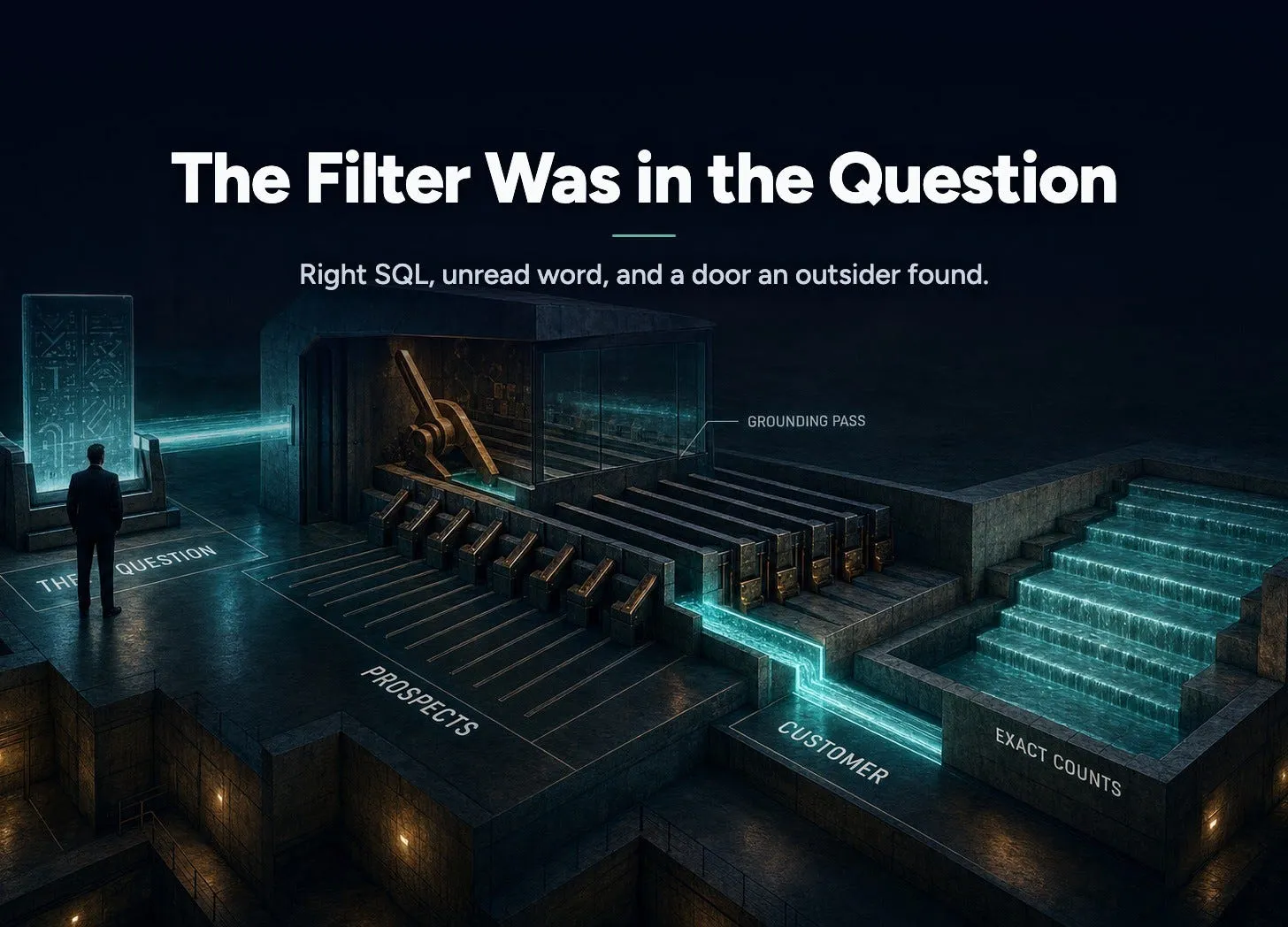
    On DevRev's Enterprise-Bench v2, agents counted prospects as customers because nothing mapped the word "customer" to the accounts table's type column. A grounding tool called before the first query, plus an answer contract, raised a held-out 19-task score from 71.9% to 89.5%.

  24. Evaluating an agent harness with the model held fixed

    slavadubrov.com · Viacheslav Dubrov

    An eight-step procedure for judging whether a harness change actually helps: pin the model, endpoint, sampling settings and machine, write tasks from the use case, hold out a test set, check actions and replies, and set thresholds before comparing. A support-assistant example shows a do-nothing design passing 8 of 16 tasks when only the database is checked.

  25. How do you orchestrate multiple agents?

    r/AI_Agents · kwerkee · 61 comments

    Give each parallel writer its own git worktree and have sub-tasks open a PR that stops once CI passes, with one landing task putting changes on main serially; this prevents agents overwriting each other's uncommitted files.

    — zzunkie, amargolin
  26. Can DeepSeek beat Claude Opus at coordinating AI agents?

    X · helmcode

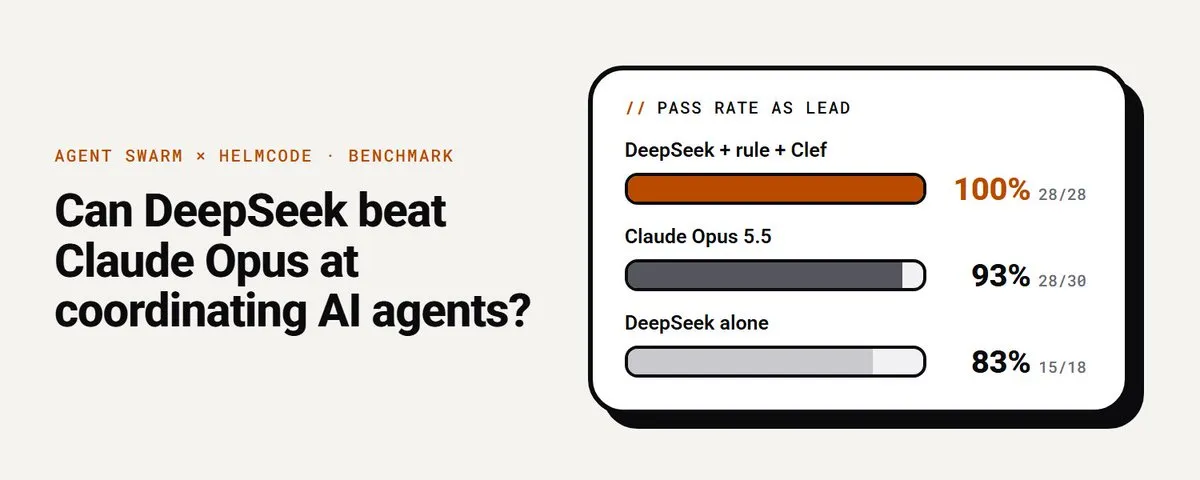
    Helmcode and Agent Swarm tested DeepSeek as the lead agent in a multi-agent swarm, adding explicit rules and Cloudflare's Clef decision model as a gate. DeepSeek rose from 83% to 100% success, while Claude Opus 5.5 reached 93%; GLM improved, Qwen and Gemma got worse.