Skip to content

Firsthand.today

#Claude Code

  1. How Claude Code's Code Mode works

    X · Arindam_1729

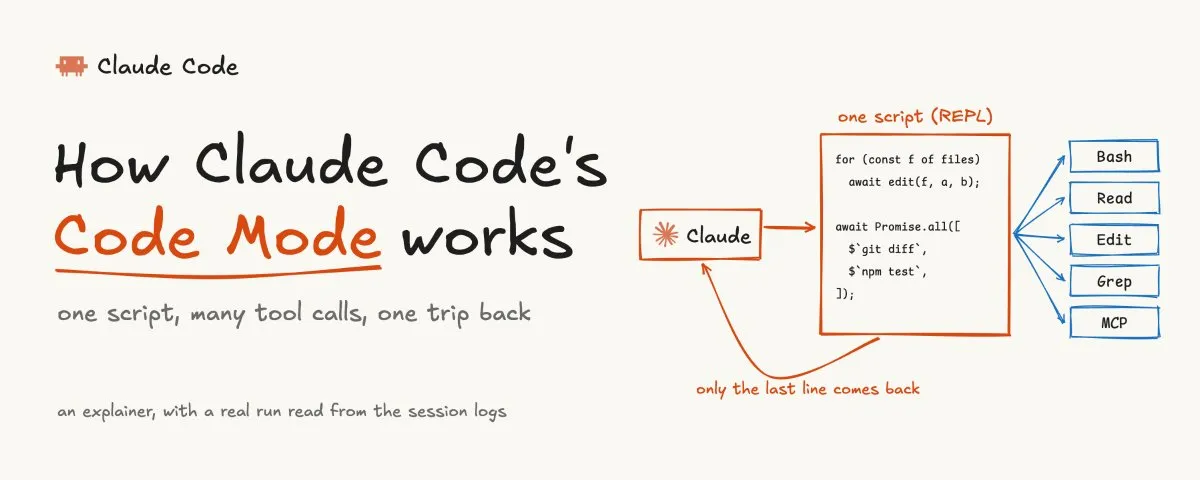
    Claude writes one JavaScript script that makes the tool calls itself, so a search, edit and test run in a single trip. In a side-by-side run, requests fell from 5 to 4 and each request read about 35k tokens instead of 53k, with cost roughly unchanged.

  2. 17 Claude features with ready-made prompts

    X · SaInfo_1

    Projects, memory, scheduled tasks, Skills, CLAUDE.md, Chrome control, Design and prompt caching each get a copy-paste prompt; cache reads now cost 5% on Opus 5.5 and Sonnet 5.5.

  3. Microsoft open-sources TokenEconomizer to cut Claude Code and Codex token costs

    X · RrrroriaShen

    Microsoft's TokenEconomizer adds micro-skills, tool pruning and a loop guard around existing coding agents without retraining models. Across 277 SWE-Bench tasks, five agent-model combinations cut average cost 18.4–30.9%, with Claude Code plus Opus 4.8 down 30.9% but first-pass rate about one point lower.

  4. Claude Code Best Practices: 8 Habits From Real Solo Builds

    shahriaemon.com · Shahria Emon

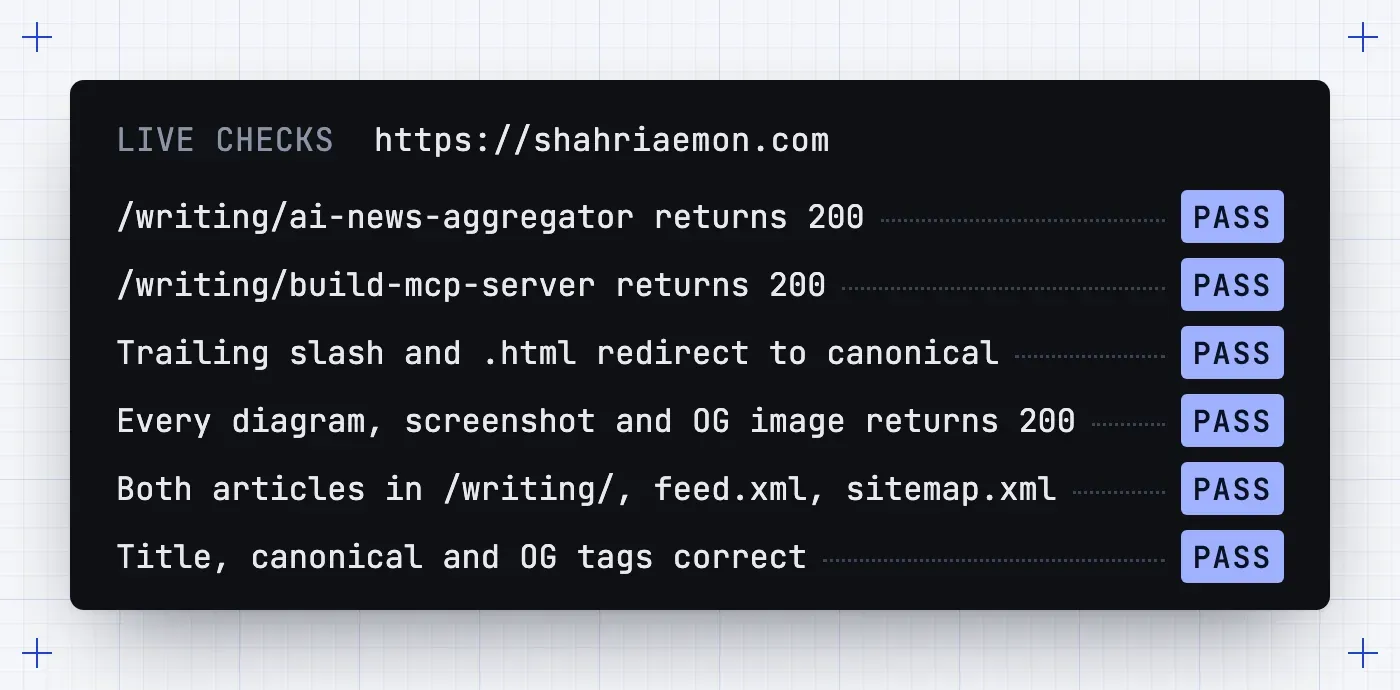
    After shipping a Telegram news bot, a finance app and a site rebuild solo with Claude Code, a developer lists eight habits that mattered: prototype first, write the spec, define done as verified live, test the rule across every day, mock external services, keep tests off production, build fallbacks, and demand measured numbers only.

  5. 62 Claude sessions rebuilding my media library in 80 minutes

    aaronorelup.com · Aaron Orelup

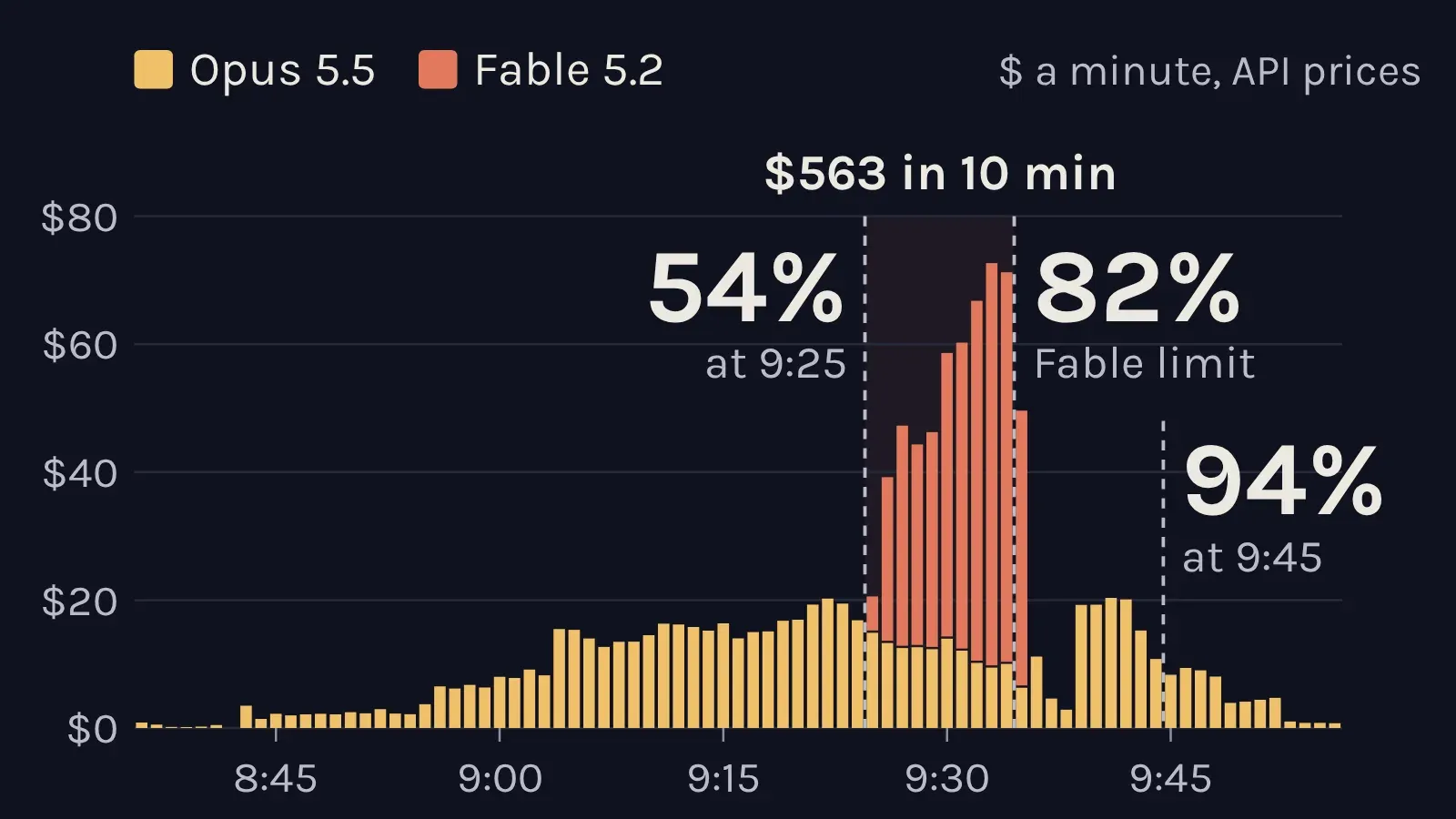
    One Claude Code orchestrator session fanned out to 62 cloud sessions and at least 425 helper agents to tag and clean a 72,670-file media library in 80 minutes, costing $1,186 at API prices. Three things broke and were fixed the same evening.

  6. How to write prompts for Claude Code: write a brief, not a wish

    X · Innovati_nParty

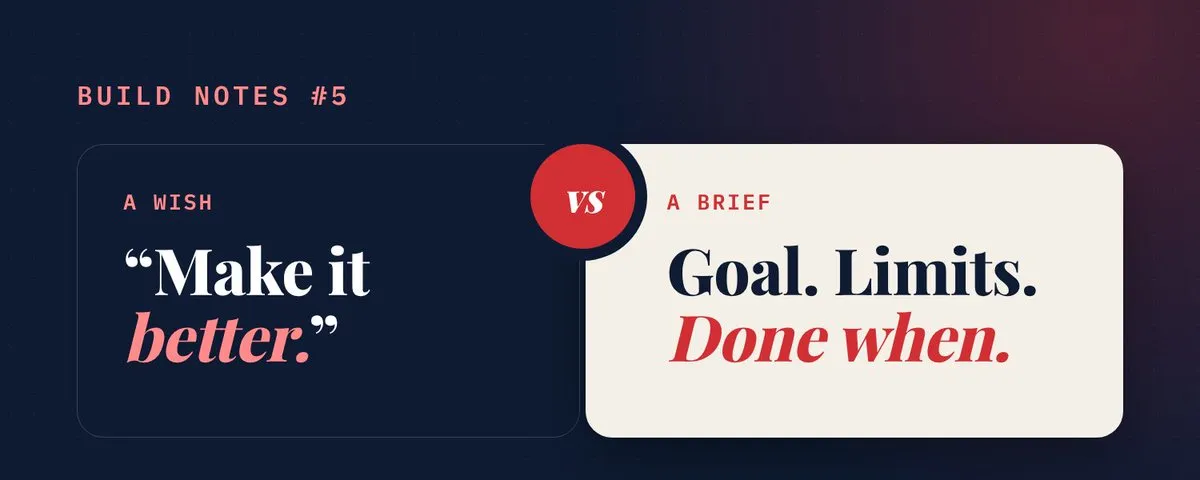
    Claude Code fills any gap in a request with a reasonable guess, so a good prompt is a six-part brief: goal, audience, context, constraints, must-never, and done-when. A blog cover redesign failed on "make them more attractive" and succeeded once the brief capped covers at 18 words with no bullet lists.

  7. First experiences with spec-driven development

    warrenmar.com

    Running GitHub's Spec-kit with Claude Code Auto mode, the agent worked about 4 hours unattended before hitting quota, and a weekend two-person hackathon became roughly an hour of spec writing plus an overnight run and 1-2 hours of fixes. Tests are essential to steer the agent; compaction corrupts new specs.

  8. Half of What AI Delivers Needs Rework: After Logging 204 Dispatches, Managing AI Is Managing a Team

    liuqiwei.dev · 刘启威

    Over three weeks and 204 dispatches to five coding agents, first-pass acceptance stayed near 50% (Codex 38%, Antigravity 51%, DeepSeek Harness 50%), yet final pass rates reached about 80% through independent cross-model acceptance, a two-round rework cap and written completion definitions. The biggest cost was the coordinator re-reading context, once 39 million cached tokens in a single task.

  9. Vibe coding with Claude: how I built my website with 179 pull requests

    christos.studio · Christos Stavrou

    Over three weeks, 179 pull requests against a Ghost theme went live via Claude Code, each gated by a 150-line CLAUDE.md rule file and Ghost's gscan check before merge. 55 of the 179 were fixes, and some bugs only a separate read-only AI review caught.

  10. My AI Setup: Context, Agents and a Human in the Loop

    blog.oceanleaf.ch · Niklas Tinner

    A deliberately boring setup: a folder of Markdown context files read by Claude Code, Codex, Copilot CLI and Grok, one skill file per repeated task, scheduled agents for mail, sales, news and finance, and four cloud Grok bots. Every write passes a human gate.

  11. Making 3D heads with AI: what survived was having AI write Blender Python

    X · gomezdoworks

    Over about a month, four head-modeling approaches failed (TripoSR, UE Geometry Script, visual hull, ellipsoids), as did TripoSG and Tripo. The method that worked: Codex writes Blender Python, renders headless, inspects the images and fixes, about 19 minutes and 93k tokens per pass.

  12. Designers: you need a prototype playground. Here's the prompt

    X · willdjthrill

    A designer describes a reusable prototype playground: a folder of self-contained sub-apps on a shared shadcn design system, hosted on Vercel or Cloudflare, with curated rules so Claude Code or Codex can spin up a live prototype from one sentence.

  13. I Used 664 Million Tokens to Build My Favorite App Yet

    alexlieberman.com · Managing Partner of Tenex

    A non-engineer built Bricker, an AI LEGO-set generator with 3D models, parts lists and step-by-step instructions, in four days using Claude Code at a cost of about $1,200 in API credits and 664 million tokens.

  14. How the Claude Code team thinks about verification

    claude.dev · Addy Osmani · 233 comments

    The verification workflow is token-expensive; a verify skill raised trust in AI coding but used much more time and spend, so simple changes still skip it and DeepSeek was adopted as the cheaper workhorse.

    — gregwebs
  15. How I Built and Shut Down an AI-Coded Sports Trivia Game

    thetechstreetnow.com

    A non-engineer from sales pushed 172 commits to a daily sports trivia game in four weeks, 155 co-authored by Claude, then shut it down. The post covers what shipping fast with an agent produced and the bugs that surfaced.

  16. Postmortem: Making CUT THE COUNT in Four Days with Claude Code

    hiroyukitsunoda.itch.io · HiroyukiTsunoda

    A solo developer built a documentary-editing game in four days for an AI game jam, handing all C++ and editor scripting to Claude Code connected to Unreal Editor over MCP. The postmortem details the split of labor, the work-log practice, and the failures that became rules.

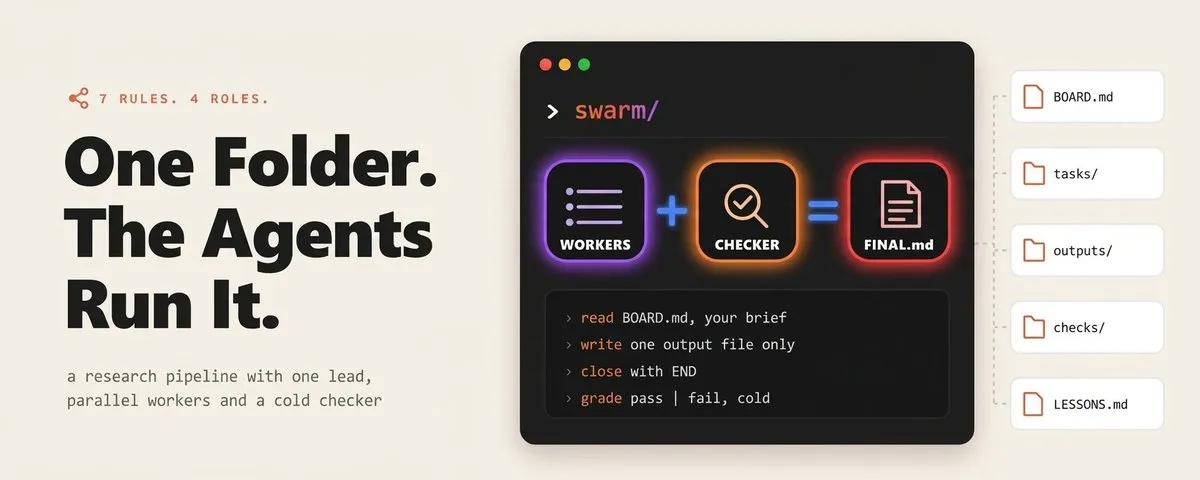
  17. I Folded a Whole Research Pipeline Into One Folder and Let the Agents Run It

    X · ridark_eth

    A build log for a file-coordinated agent swarm: one lead splits the job into briefs, parallel workers each write one output file, a cold checker with a different model grades each result, and the lead merges the passes. Seven rules, nine files and five saved prompts make the loop runnable unattended.

  18. I Installed One Repo and Now My Agent Reads Every App on My Disk

    X · birmeya

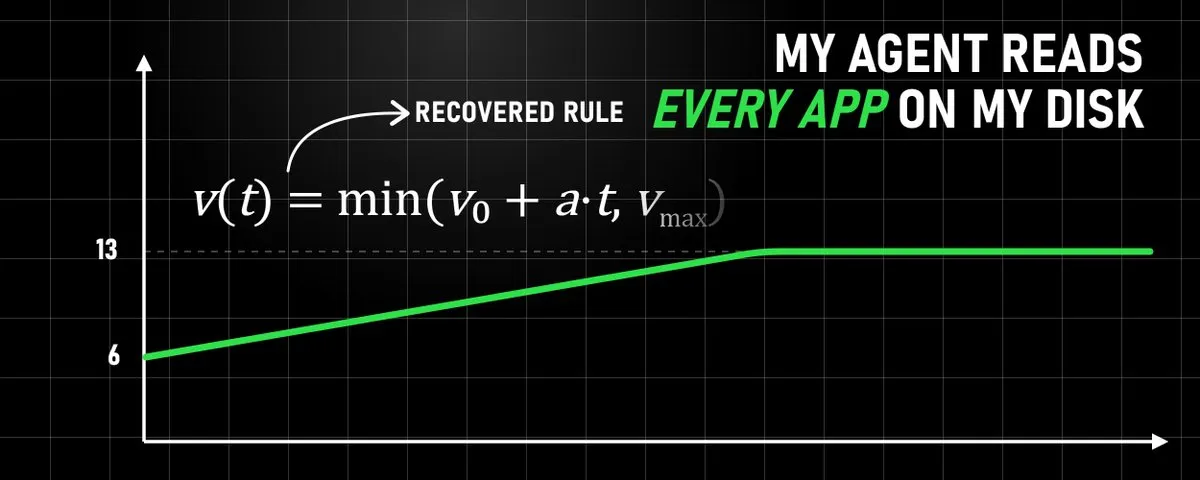
    REA, an MIT-licensed MCP server and CLI, plugs into Claude Code, Codex, Cursor and others to reverse engineer Electron apps, native binaries, APKs and smart contracts locally, returning each finding with file, function and call chain. The author walks through install, a first trace and the clean-room legal line.

  19. Grok Bot Inc: build your agent harness in 10 steps

    X · 0xMorlex

    After Grok Bot 1.0 launched on November 11, the author hired ten bots as a company, each with one job and a charter covering what it owns, what good looks like, and where it stops. The piece walks through each hire, from Chief of Staff to growth team.

  20. What is the best harness for each model?

    Hacker News · Edward40 · 131 comments

    Cost per pass is largely explained by steps per pass, which is close to tautological since token spend tracks step count; steps are also not directly controlled by the harness the way tool set and system prompt are, and failed runs that spin for a long time inflate variance.

    — Majromax
  21. How I Wired a 1,000-Agent Harness from One Folder and Nine Prompts

    X · 0xNeuroBlue

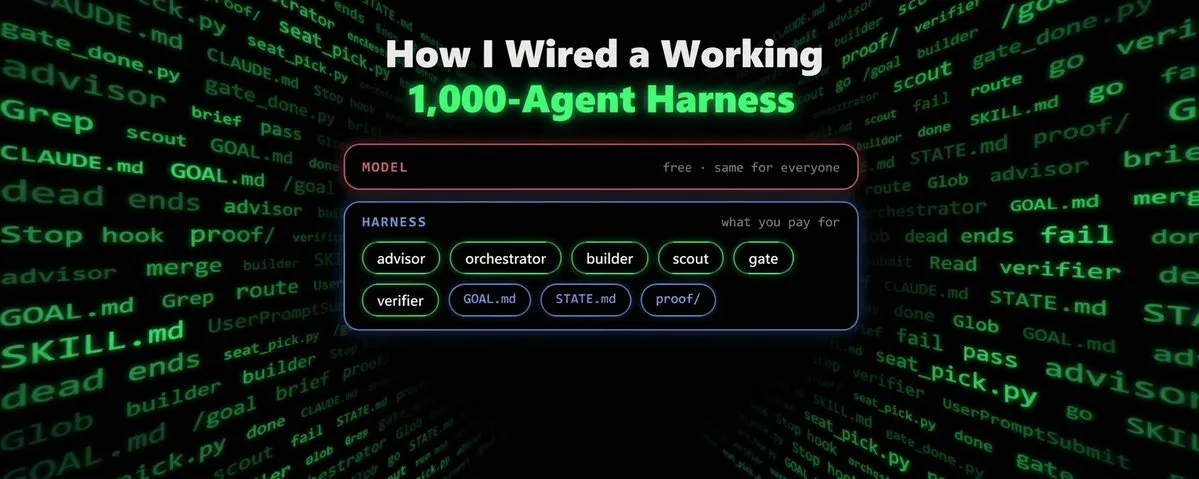
    A Claude Code harness built from one project folder: five model seats (Fable 5.2 as advisor or orchestrator, Opus 5.5, Sonnet 5.5, Haiku 5.5), nine prompts, and hook-based routing and done gates. The author argues the coordination layer, not the model, decides outcomes.

  22. Cursor's downfall is worth talking about

    r/cursor · GazelleNo1655 · 325 comments

    Claude models cost about 10x more per token inside Cursor than buying Claude directly, which pushes heavy users to Claude Code.

    — jomic01, davearneson
  23. How do you orchestrate multiple agents?

    r/AI_Agents · kwerkee · 61 comments

    Give each parallel writer its own git worktree and have sub-tasks open a PR that stops once CI passes, with one landing task putting changes on main serially; this prevents agents overwriting each other's uncommitted files.

    — zzunkie, amargolin
  24. Anthropic Just Released the New Rules of Claude Code

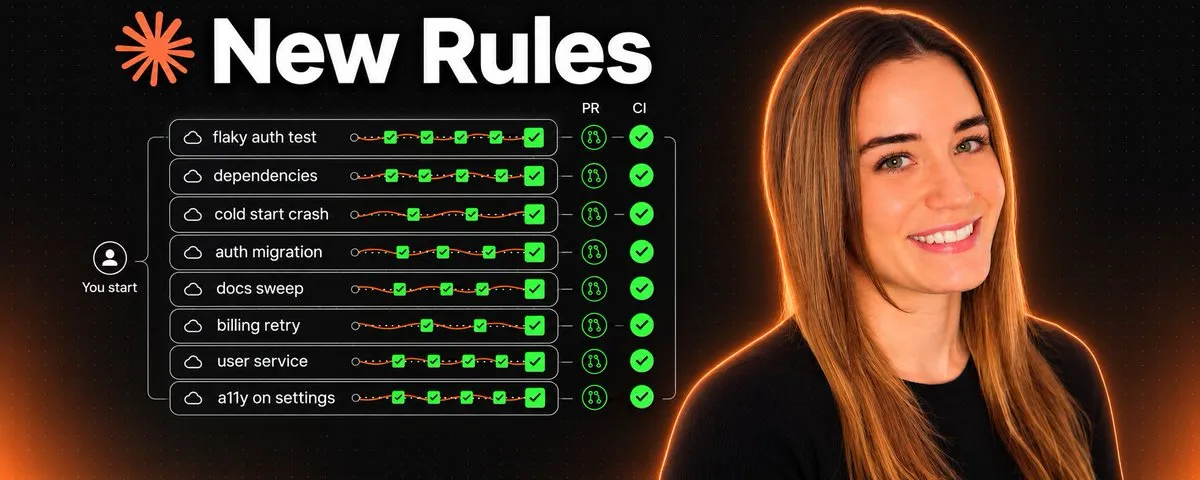
    X · nateherk

    A recap of Claude Code team engineer Lydia Hallie's talk on managing dozens of sessions, covering CLAUDE.md cleanup, auto mode trust boundaries, deny rules, verifiable completion checks, and a coordinator session. Anthropic went from about 2,500 code changes a day in May to over 30,000 in September.