Skip to content

Firsthand.today

#evals

  1. How do you make AI agents reliable when they use multiple tools?

    r/AI_Agents · Aware-Resource9831 · 37 comments

    Save real tool-call inputs and outputs as a replay set and rerun the agent against them after any prompt or tool change, so regressions surface before production; pin the model version too, since silent updates change tool calls.

    — nmohoni
  2. How Airbnb uses cost per task to operate coding agents on Amazon Bedrock

    aws.amazon.com

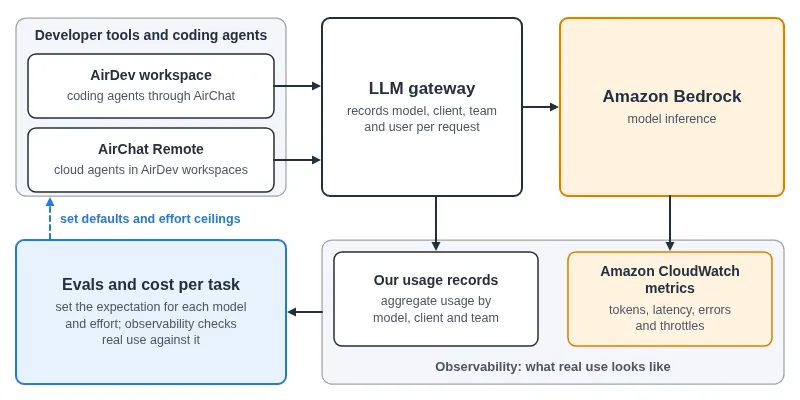
    Airbnb runs coding agents for thousands of engineers through an LLM gateway on Amazon Bedrock. It prices whole tasks from four token types, pairs eval scores with cost per task to set model defaults and effort ceilings, and uses CloudWatch metrics to catch production drift.

  3. Support copilot keeps repeating dead SQL tool calls

    r/AI_Agents · Lanky-Passenger-5777 · 15 comments

    A missing-column error is deterministic, so retrying with tweaked SQL can't fix it; cap identical failures at two, then return the real column list for that tenant and end the turn.

    — Aware_Risk7076, r0b3rtb, Wezabis2
  4. How do you test prompt changes before shipping them?

    r/PromptEngineering · Weird_Impression_264 · 19 comments

    Automate grading of the existing test set: use code checks like string match first, an LLM grader with a detailed rubric for judgment calls, and human grading only where necessary; test the grader's reliability before scaling it.

    — oyren-ai
  5. Half of What AI Delivers Needs Rework: After Logging 204 Dispatches, Managing AI Is Managing a Team

    liuqiwei.dev · 刘启威

    Over three weeks and 204 dispatches to five coding agents, first-pass acceptance stayed near 50% (Codex 38%, Antigravity 51%, DeepSeek Harness 50%), yet final pass rates reached about 80% through independent cross-model acceptance, a two-round rework cap and written completion definitions. The biggest cost was the coordinator re-reading context, once 39 million cached tokens in a single task.

  6. AI agents that need constant babysitting are not really agents

    r/AI_Agents · Few-Garlic2725 · 49 comments

    Reviewing a 500-line agent diff can take longer than writing the change by hand; give the agent a narrow job with a check that needs no line-by-line reading (tests pass, diff stays small, no new dependencies), track total human minutes, and widen scope only where it keeps passing.

    — Ramdhan77
  7. Does a learned rule change what your AI assistant writes?

    blogs.cisco.com · Julio Gomez

    Across 72 Cursor sessions with Claude Sonnet 4.6, an agent wrote an insecure trust check in 8 of 8 attempts without rules learned from real code, and 0 to 1 of 4 with them; the 23 generic CodeGuard core rules made no measurable difference.

  8. How the Claude Code team thinks about verification

    claude.dev · Addy Osmani · 233 comments

    The verification workflow is token-expensive; a verify skill raised trust in AI coding but used much more time and spend, so simple changes still skip it and DeepSeek was adopted as the cheaper workhorse.

    — gregwebs
  9. How to build an AI MVP: lessons from shipping three AI products

    iftiak.com · Iftiak Ahamed Product Manager, Product Designer

    Across LeanDeck, SportsOnTV and Varsee, the hard decisions were where AI acts, what it returns, how to test it and who reviews it. Proposals dropped from 6–10 hours to about 5 minutes; invoicing stayed on fixed rules; SportsOnTV launched with per-summary human review, later removed after tuning.

  10. LLM as a judge in production: ship it in shadow mode first

    prasad.tech

    Replacing regex quality checks on outbound email with an LLM judge, the gate was split into a deterministic floor and an intent layer, and the judge ran in shadow against the old rules before enforcing. On 31 labeled cases the cheap model agreed 3 times; frontier models agreed 24.

  11. My Top 10 Eval Papers of 2026

    X · omarsar0

    A curated list of 10 eval papers from 2026, each tied to a concrete failure in public benchmarks or agent grading and to a practice you can apply to your own evals, from paired comparisons to auditing self-improvement runs for cheating.

  12. What is the best harness for each model?

    Hacker News · Edward40 · 131 comments

    Cost per pass is largely explained by steps per pass, which is close to tautological since token spend tracks step count; steps are also not directly controlled by the harness the way tool set and system prompt are, and failed runs that spin for a long time inflate variance.

    — Majromax
  13. The Filter Was in the Question: Grounding Agent Queries Before the First SQL

    shyanming.substack.com · Shown, Not Claimed

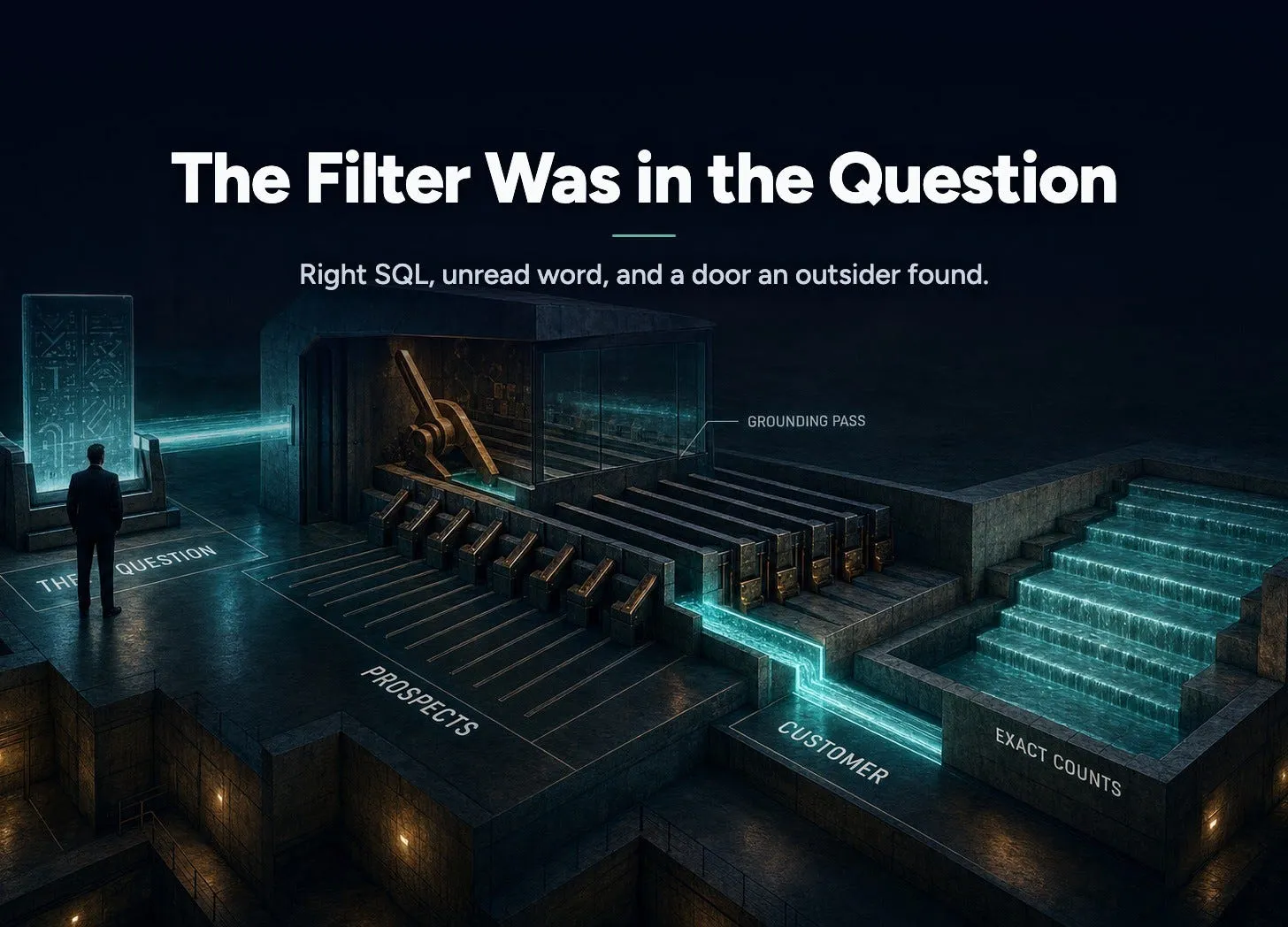
    On DevRev's Enterprise-Bench v2, agents counted prospects as customers because nothing mapped the word "customer" to the accounts table's type column. A grounding tool called before the first query, plus an answer contract, raised a held-out 19-task score from 71.9% to 89.5%.

  14. Evaluating an agent harness with the model held fixed

    slavadubrov.com · Viacheslav Dubrov

    An eight-step procedure for judging whether a harness change actually helps: pin the model, endpoint, sampling settings and machine, write tasks from the use case, hold out a test set, check actions and replies, and set thresholds before comparing. A support-assistant example shows a do-nothing design passing 8 of 16 tasks when only the database is checked.