Skip to content

Firsthand.today

#scope creep

  1. There's Money in Fixing Vibe-Coded Apps

    ilikekillnerds.com · Dwayne Charrington

    A developer who rescues vibe-coded apps describes the recurring failure pattern: demos work, then concurrent bookings, double submits and lost payments appear, and owners can't find their source code or roll back a bad change. He lays out a paid-assessment model for taking on the work.
  2. I fix vibe-coded apps for a living, and they all have the same problems

    makeuseof.com · Jayric Maning

    A developer who repairs vibe-coded apps for clients says the same four failures recur: no reproducible dev environment or Git history, no logging or error handling, secrets and authorization left exposed, and feature creep without boundaries. Each comes with a concrete fix and prompt.

  3. The fixed-price project that cost me three weeks of unpaid work

    blogs.mobilebytesensei.com · MobileByteSensei

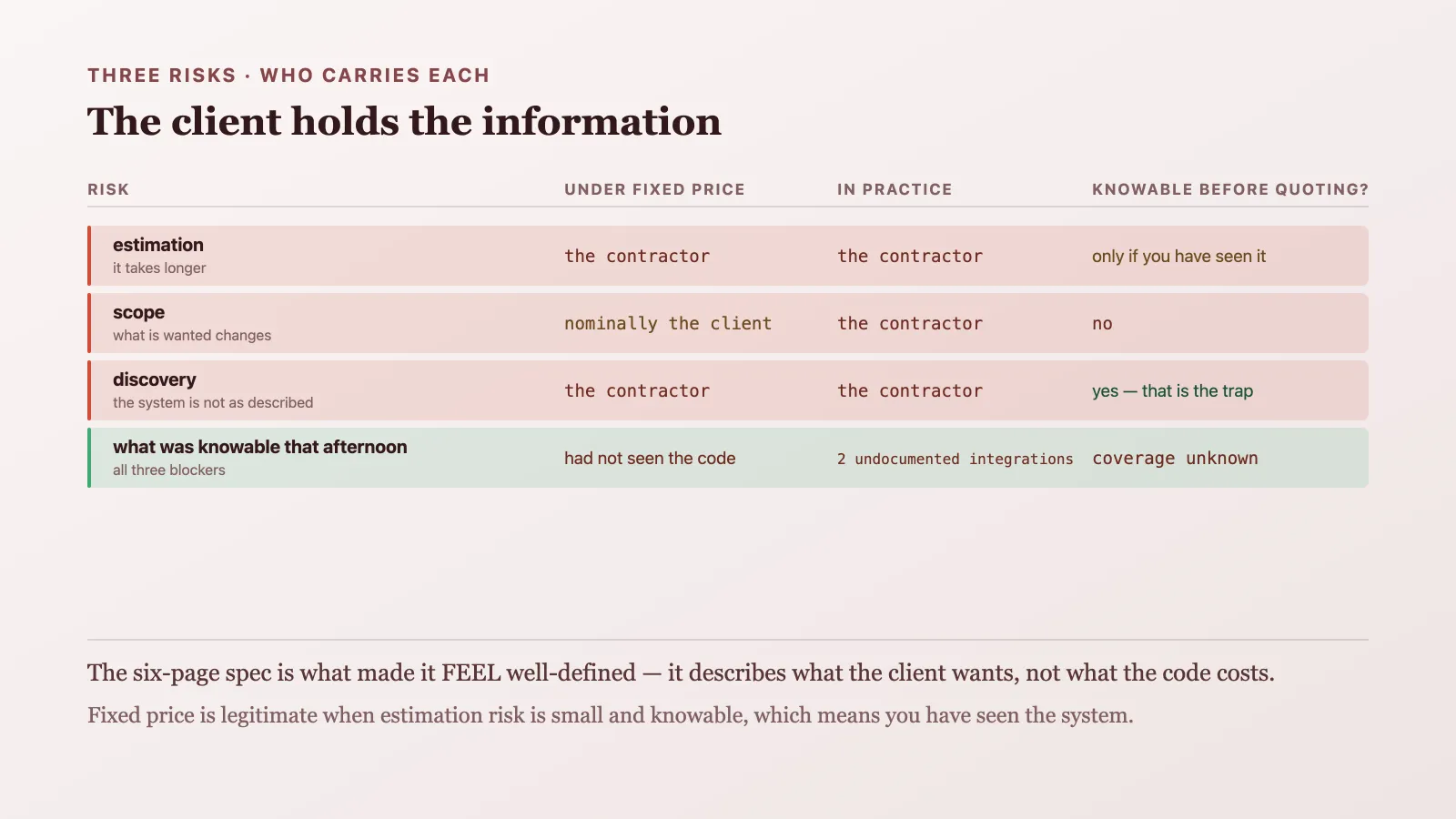
    A £12,000 fixed-price Kotlin Multiplatform migration quoted at six weeks took nine and a half, cutting the effective rate to £1,263/week and costing about £15,000 once a turned-down engagement is counted. Two of the three causes were invisible without repository and CI access.

  4. The hardest part of vibe coding is resisting the urge to build everything

    r/vibecoding · recro69 · 82 comments

    Scope creep comes from removed friction, not from the AI: a dashboard used to cost two days of boring work, now it costs two minutes of prompting, so every "wouldn't it be cool if" gets built. Writing a one-line problem statement before opening the editor and treating AI suggestions as a menu rather than a todo list keeps projects small.

    — Upper_Flow_7066